|

|
Embryonic Stem Cells
CD9, CD24, CD29, CD49f, CD117, CD133, CD324, SSEA-1, SSEA-3, SSEA-4, Tra-1-60, Tra-1-81
|

|
Ectoderm
CD15, CD29, CD49f, CD133, GFAP, Nestin, Neurofilament, Olig2, Pax6, SOX2
|
|

|
Endoderm CXCR4, FOXA2, GATA4, GATA6, SOX17
|

|
Mesoderm
CD10, CD16/32, CD34, CD38, CD45RA, CD48, CD90, CD117, CD123, CD127, CD133, CD135, CD150, Sca-1
|
 |
Hemangioblasts
Human: CD133
Mouse: Brachyury, CD135
Multipotent Progenitor
Human: CD34, CD90, CD135, Lin-
Mouse: CD34-, CD48-, CD117, CD150, Sca-1
Common Lymphoid Progenitor
(Differentiates into B cells, T cells, and ILC)
Human: CD10, CD34, CD45RA, CD135, Lin-
Mouse: CD117low, CD127, CD135, Lin-
Granulocyte-Monocyte Progenitor
(Differentiates into Monocytes, Macrophages, Dendritic Cells, and Granulocytes)
Human: CD34, CD38, CD115, CD116, CD123
Mouse: CD16/32, CD34, CD117, Sca-1
|
Hematopoietic Stem Cells
Human: CD34, CD90, CD135, Lin-
Mouse: CD34-, CD48-, CD117, CD150, Sca-1
Common Myeloid Progenitor
Human: CD34, CD38, CD45RA-, CD135
Mouse: CD34, CD117, CD135, Sca-1-
Megakaryocyte-Erythrocyte Progenitor
(Differentiates into RBCs and Megakaryocytes)
Human: CD34, CD71, CD110
Mouse: CD34-, CD41, CD105, CD150
|
 Login/Register


 United States ($) USD
 Austria (€) EUR
 Belgium (€) EUR
 Finland (€) EUR
 France (€) EUR
 Germany (€) EUR
 Ireland (€) EUR
 Japan (¥) JPY
 Luxembourg (€) EUR
 Netherlands (€) EUR
 Switzerland (CHF) CHF
 United Kingdom (£) GBP

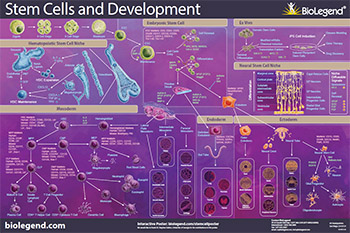 Stem cells are unique cells due to their capability to limitlessly self-renew and differentiate into each cell type in the adult body. Stem cells’ capability to differentiate depends on the stem cell type. Regardless of the type of stem cell you are working with, BioLegend offers stem cell-focused reagents for flow cytometry, cell screening, western blotting, ELISAs, cell differentiation, and more.


Follow Us